
- Rural WI vs. Corporate Ag
Public Calls for Oversight of Factory Farms at Pierce County Committee Meeting
November 23, 2025
November 23, 2025
Pierce County, WI – Residents made it clear they want protection from the harmful impacts of factory farms at the November 17 meeting of the county’s Groundwater Advisory Committee.
Over 50 residents turned out in person and online to hear a presentation to the committee from Lisa Doerr, a Polk County farmer who served on a committee to draft a town Operations Ordinance for multiple Polk County towns to ensure communities have meaningful oversight over factory farms. Operations Ordinances have since been passed in the towns of Maiden Rock and Isabelle in Pierce County, with several others in the area looking into drafting their own.
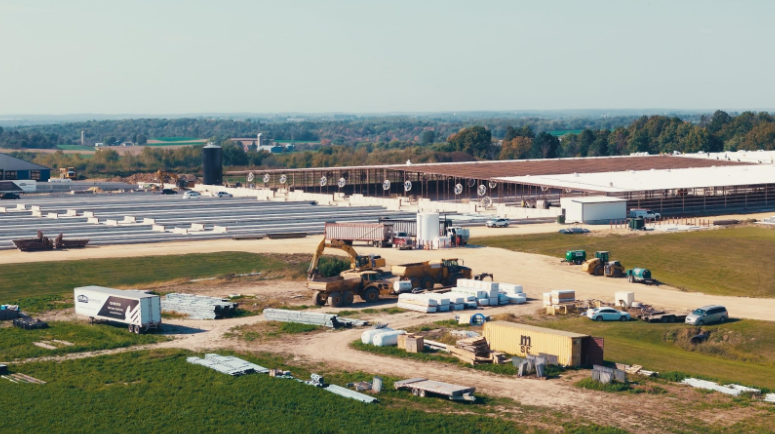
Residents are organizing in search of protection from the impacts of factory farms like the proposed expansion of Ridge Breeze Dairy in Pierce County. As Wisconsin’s agriculture industry has become consolidated under corporate control, massive factory farms pose numerous threats to health and homes in rural communities, including pressure on family farms, polluted air and water, and damaged roads.
Doerr presented on the many gaps in current state regulations that leave local communities at risk. This includes wholly insufficient carcass disposal or mortality plans for factory farms in the case of mass die offs. Earlier this fall, a Jefferson County factory farm had to euthanize over 3 million birds due to an avian flu infection. A 2019 fire at a hog factory in Mondovi left the operator scrambling to find a place to put the 4,000 hog carcasses, before deciding to landfill them.
In another recent example, Wisconsin DNR asked Ridge Breeze Dairy to provide a mortality management plan as part of the dairy’s controversial permitting process. That plan, as Doerr pointed out, is only three bullet points long and provided little-to-no detail on what the factory farm would do in the case of a mass casualty event. According to federal data, 6,800 cows would leach an estimated 136,000 gallons of fluid within days of a mortality event.
Laura Carlson serves on the planning commission in the town of Gilman, where the town has been actively exploring an Operations Ordinance since earlier this year. During public comment, Carlson shared, “The ordinance is actually pretty straightforward – it asks for some plans from the [factory farm]. As a town board and as a community, how are we expected to feel good about this new business going on next door, if we don’t know how you plan to dispose of your animals?”
Carlson also referred to high rates of water contamination in the Town of Emerald in St. Croix County, where a factory farm previously known as Emerald Sky Dairy has had multiple manure spills reported over the last 10 years. The town well in Emerald has reached as high as 60 parts per million in nitrates, 6 times the safe drinking water standard, while some residents have chosen to move away due to repeated issues that arose from living near the facility. Emerald Sky was sold to Breeze Dairy Group, owners of Ridge Breeze, last year.
Rick Dougherty, a resident of the town of El Paso, shared his concern about Ridge Breeze’s proposed expansion with the committee and encouraged the community to band together to find a solution. “Our concern is that it’s all concentrated in one area… Bigger is not better, necessarily, and, together, we can come up with a solution.”
The Operations Ordinance provides a common-sense solution that Pierce County residents have been rallying around locally since the town of Maiden Rock passed the first Operations Ordinance in the county late last year. The town of Isabelle followed in September of this year. A poll conducted by Sun Argus earlier this year showed that 97% of the roughly 200 respondents support local ordinances for expanding factory farms.
Pierce County’s Groundwater Advisory Committee has been studying concerns around water quality in Pierce County for two years after being appointed by the county board in late 2023. Current estimates show that about 13% of private wells in Pierce County test above the safe drinking water standard, which would put Pierce County among the most susceptible counties to nitrate contamination in the state. The committee recommended a 5-year well testing program to gather more data, which was approved by the full county board earlier this year. The committee is expected to meet next in January.